Tire Pressure
tire pressure
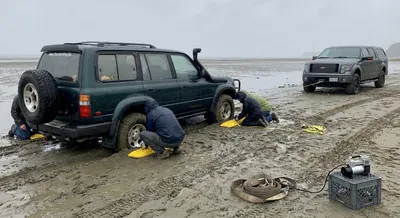
Recovery and Traction on Soft, Wet Shorelines
An example of why this happens is the dynamics of mudflats: fine silt and clay particles hold water in a gel-like matrix that looks firm but gives...
Tire Pressure
Tire pressure is the amount of air inside a vehicle’s tires, usually measured in pounds per square inch (psi) or kilopascals (kPa). It determines how much of the tire touches the ground, which affects traction, fuel efficiency, ride comfort, and how quickly the tire wears out. Correct pressure helps the tire perform as designed, while too low or too high pressure can reduce grip, increase rolling resistance, and lead to uneven wear or blowouts. Drivers should check tire pressure when the tires are cold, using a reliable gauge, and follow the vehicle manufacturer’s recommended values printed on the door jamb or in the owner’s manual. Pressure needs can change with temperature, load, and driving surface, so regular checks are important. Lowering pressure can help a vehicle float and gain traction on soft or slippery surfaces, but it also increases the risk of sidewall damage and rim contact if taken too far. Overinflation reduces the contact patch and can make the ride harsh while concentrating wear down the center of the tread. A portable compressor and a small pressure gauge are useful tools to carry for on-the-go adjustments. Keeping tires within the recommended range improves safety, saves fuel, and extends tire life. Regular maintenance—visual inspection, rotation, and pressure checks—keeps tires working safely and efficiently.
Get New Boondocking Research & Podcast Episodes
Subscribe to receive new research updates and podcast episodes about boondocking, off-grid camping, RV travel, van life, dispersed camping, campsites, gear, power, water, safety, and road trip planning.