Solar Panels
solar panels
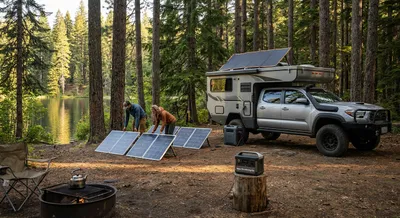
Powering an Off-Grid Lakeside RV: Solar in the Forest Shade
In a forested lakeside campsite, shade and fog are the enemies of solar generation. Tree cover intercepts direct sunlight, and low clouds or mist...
Solar Panels
Solar panels are devices that convert sunlight into electricity using materials called photovoltaics. They are made of many small cells wired together and mounted in a frame to capture sunlight and produce electrical current. When sunlight hits these cells, it knocks electrons loose and creates a flow of electricity that can be used immediately or stored in batteries. Panels can be installed on roofs, on the ground, or on portable mounts depending on space and needs. Different panels vary in size and efficiency, so some generate more power from the same amount of sun. Solar panels matter because they offer a clean, renewable source of energy that cuts reliance on fossil fuels and lowers greenhouse gas emissions. They can reduce electricity bills, provide power in remote locations, and serve as backup during outages. To get the best results you need to consider panel orientation, tilt, and shading, as well as the quality of inverters and batteries if you plan to store energy. Panels require little maintenance—mostly occasional cleaning and inspection—and typically last 20 to 30 years. Knowing how to size a system for your energy needs and where to place panels helps you make the most of the sun.
Get New Boondocking Research & Podcast Episodes
Subscribe to receive new research updates and podcast episodes about boondocking, off-grid camping, RV travel, van life, dispersed camping, campsites, gear, power, water, safety, and road trip planning.