Solar Shading
solar shading
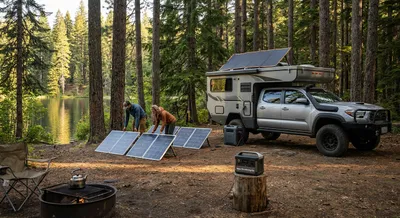
Powering an Off-Grid Lakeside RV: Solar in the Forest Shade
In a forested lakeside campsite, shade and fog are the enemies of solar generation. Tree cover intercepts direct sunlight, and low clouds or mist...
Solar Shading
Solar shading happens when something blocks sunlight from reaching a solar panel, even partially. Shadows from trees, buildings, chimneys, or nearby equipment can cut a panel’s output a lot more than you might expect, because panels and strings of panels are often wired together so one shaded section can reduce the whole string’s performance. Shade can also create hot spots on panels if some cells are forced to dissipate energy as heat, which can shorten the panel’s life. Because of this, avoiding or managing shading is a key part of siting and designing a solar array. Mitigation options include changing panel placement or layout, trimming or removing vegetation, using module-level power electronics (like microinverters or optimizers), or installing panels where shade is minimal during peak sun hours. It’s important to consider both fixed shade (permanent structures) and moving shade (from sun angle or seasonal foliage). Doing a simple shading study or observing the site through the day and seasons helps you predict problems before installation. In short, controlling shading is one of the most effective ways to protect and improve a solar system’s energy production and longevity.
Get New Boondocking Research & Podcast Episodes
Subscribe to receive new research updates and podcast episodes about boondocking, off-grid camping, RV travel, van life, dispersed camping, campsites, gear, power, water, safety, and road trip planning.