Off-grid Living
off-grid living
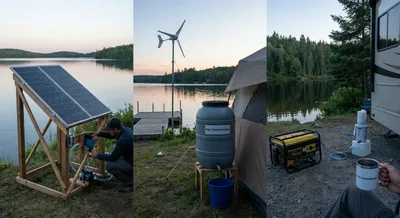
Case Studies: Three Lakes, Three Power/Water Strategies
Lessons: Each climate demands a different mix of resources. In the alpine case, reliability trumped abundance – we leaned heavily on wind and...
Off-grid Living
Off-grid living means running a home or property without relying on public utility systems like the electrical grid, municipal water, or sewer services. People who live this way generate or collect their own electricity, capture and treat their own water, and manage waste on-site. It often involves solar panels, wind turbines, batteries, rainwater harvesting, wells, composting toilets, or septic systems. The goal is to be self-reliant and to reduce dependence on outside infrastructure. Living off-grid can give people more control over their resources, lower monthly bills, and allow them to live in remote places where services are not available. It also requires careful planning and regular maintenance because you are responsible for the systems that keep your home running. Energy efficiency and conservation become important habits, since storage and production can be limited. There can be legal or zoning hurdles to setting up some systems, and upfront costs may be higher than hooking up to utilities. Many people choose this lifestyle for environmental reasons, emergency preparedness, cost savings over time, or simply a desire for independence and simplicity.
Get New Boondocking Research & Podcast Episodes
Subscribe to receive new research updates and podcast episodes about boondocking, off-grid camping, RV travel, van life, dispersed camping, campsites, gear, power, water, safety, and road trip planning.