Shoreline Driving
shoreline driving
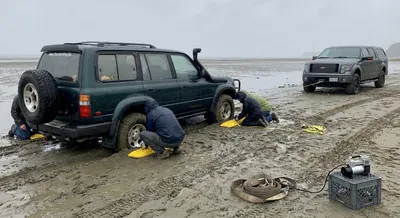
Recovery and Traction on Soft, Wet Shorelines
An example of why this happens is the dynamics of mudflats: fine silt and clay particles hold water in a gel-like matrix that looks firm but gives...
Shoreline Driving
Shoreline driving means operating a vehicle along the edge of a body of water, such as a beach, riverbank, lake shore, or tidal flat. People do this for recreation, fishing, work, or to reach remote spots that are not accessible by normal roads. The ground near water can be soft, uneven, or covered by tides and waves, so vehicles can lose traction and get stuck more easily than on solid ground. Tides and changing weather can quickly alter the surface and water depth, creating safety risks for drivers and passengers. Many shorelines are home to nesting birds, fragile plants, and delicate ecosystems, so driving there can cause erosion, habitat damage, and disturbance to wildlife. Because of these hazards, shoreline driving matters both for personal safety and for protecting the environment. Drivers should know local rules and permits, check tide schedules, travel slowly, and carry recovery gear like traction boards, a shovel, and a tow strap. Using the right tire pressure and choosing the proper vehicle for soft ground can make a big difference in avoiding trouble. Responsible behavior keeps beaches and riverbanks accessible and healthy for other people and for wildlife, and it reduces the chance of costly rescues or fines for damaging protected areas.
Get New Boondocking Research & Podcast Episodes
Subscribe to receive new research updates and podcast episodes about boondocking, off-grid camping, RV travel, van life, dispersed camping, campsites, gear, power, water, safety, and road trip planning.