Turbidity
turbidity
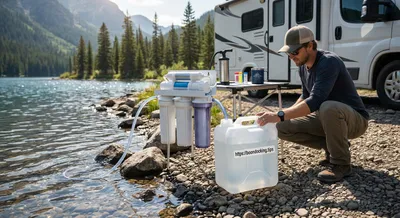
Water Safety 101: Treating Lake Water for RV Boondocking
Even before treating it, choose your intake carefully. Never scoop from the shoreline or shallow edges, where animal or human waste and runoff...
Turbidity
Turbidity describes how cloudy or murky a liquid is because of tiny particles suspended in it, like silt, algae, or organic debris. It’s a visible sign of water quality: the more particles floating around, the less clear the water looks. Scientists and technicians measure turbidity using instruments that report values in nephelometric turbidity units (NTU), which quantify how much light is scattered by the particles. High turbidity matters because particles can shelter bacteria and viruses from disinfectants, making water harder to clean and potentially unsafe to drink. It also affects aquatic life by reducing sunlight penetration, which harms plants and the animals that depend on them. Common causes include runoff after rain, erosion, algal blooms, and wastewater discharges. To reduce turbidity, water systems often use filtration and processes like coagulation and settling to remove particles before disinfection. For people, turbid water can look unappealing and carry a greater risk of illness, so clear water is both an aesthetic and health goal. Monitoring turbidity is a quick way to assess whether more treatment is needed before water is considered safe.
Get New Boondocking Research & Podcast Episodes
Subscribe to receive new research updates and podcast episodes about boondocking, off-grid camping, RV travel, van life, dispersed camping, campsites, gear, power, water, safety, and road trip planning.