Thermal Breaks
thermal breaks
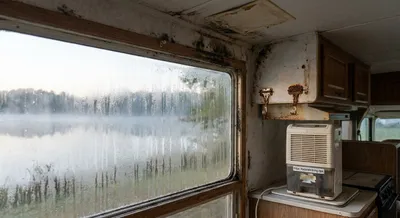
Condensation, Mold, and Corrosion in Humid Lakeside RVs
Large water bodies boost air moisture. Evaporation over a lake raises local relative humidity (RH). At night, the RV’s exterior steel and windows...
Thermal Breaks
A thermal break is a strip or layer of low-conductivity material placed between two conductive parts to slow the flow of heat. In buildings and vehicles it is used where metal or other conductors meet—such as between an outer skin and an inner frame—to prevent heat or cold from traveling straight through the assembly. By interrupting that pathway, thermal breaks reduce cold spots in winter and hot spots in summer, making interiors easier to keep comfortable. They also help limit surface condensation because warmer interior surfaces are less likely to reach the dew point where moisture forms. Common thermal break materials include plastics, rubber, dense foam, or engineered polymer strips that are built into windows, doors, and wall assemblies. In an RV, thermal breaks help prevent energy loss across metal walls and frames so heating and cooling systems do not have to work as hard. That saves fuel or battery power and reduces the chance of rust or mold forming where cold metal meets warm, moist air. When buying or maintaining an RV, look for continuous, well-sealed thermal breaks and avoid gaps that allow heat to bridge around insulation. Even small interruptions in the thermal break can produce noticeable condensation or cold spots, so regular inspection and repair are important.
Get New Boondocking Research & Podcast Episodes
Subscribe to receive new research updates and podcast episodes about boondocking, off-grid camping, RV travel, van life, dispersed camping, campsites, gear, power, water, safety, and road trip planning.