Mud Driving
mud driving
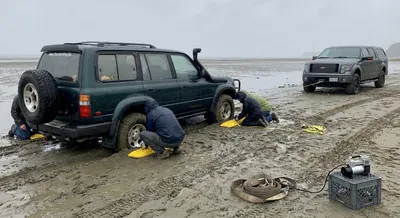
Recovery and Traction on Soft, Wet Shorelines
An example of why this happens is the dynamics of mudflats: fine silt and clay particles hold water in a gel-like matrix that looks firm but gives...
Mud Driving
Mud driving refers to operating a vehicle in soft, wet, and slippery ground where traction is limited and the risk of getting stuck is high. It requires different techniques than driving on dry pavement: drivers often maintain steady momentum, avoid sudden acceleration or braking, and choose a line that minimizes deep ruts. Tire choice and pressure matter a lot; wider, low-pressure tires can help float over mud, while aggressive tread can dig in and lose grip. Vehicle preparation like checking fluid seals, protecting electrical components, and ensuring proper clearance helps reduce the chance of mechanical trouble. Experienced drivers also learn how to use four-wheel drive, locking differentials, and momentum together to get through tricky spots. It's easy to damage the environment or private property when driving in mud, so choosing legal places and minimizing impact is important. Recoveries are common in mud driving, so carrying recovery gear and knowing how to use it safely is wise. Practicing in safe areas and learning to read the ground will make mud driving more predictable and less stressful.
Get New Boondocking Research & Podcast Episodes
Subscribe to receive new research updates and podcast episodes about boondocking, off-grid camping, RV travel, van life, dispersed camping, campsites, gear, power, water, safety, and road trip planning.