Micro-hydro
micro-hydro
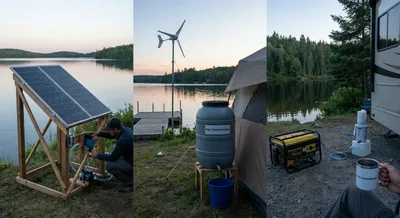
Case Studies: Three Lakes, Three Power/Water Strategies
Lessons: Each climate demands a different mix of resources. In the alpine case, reliability trumped abundance – we leaned heavily on wind and...
Micro-hydro
Micro-hydro refers to small-scale hydroelectric systems that generate electricity from the flow of a stream or river, usually producing a few kilowatts to a few hundred kilowatts. Unlike large dams, these systems often use the natural flow and drop of water with minimal impoundment, so they can have a smaller environmental footprint. A basic micro-hydro setup includes an intake, a pipe or channel to carry water, a turbine that water spins, and a generator that converts the turbine’s motion into electricity. Because water flow can be steady, micro-hydro can provide reliable, continuous power, making it useful for powering homes, farms, or small communities, especially in remote areas. Site suitability depends on having enough water flow and a drop in elevation; not every stream is a candidate. Maintenance is generally simpler than for large stations, but systems still need seasonal checks, debris screening, and occasional repairs. Environmental considerations include protecting fish passage and avoiding major changes to river ecosystems, which designers address through careful planning. Micro-hydro systems can also be combined with batteries or other generation sources for more flexible energy supply. For places with the right natural conditions, micro-hydro offers an affordable and long-lasting way to generate clean electricity locally.
Get New Boondocking Research & Podcast Episodes
Subscribe to receive new research updates and podcast episodes about boondocking, off-grid camping, RV travel, van life, dispersed camping, campsites, gear, power, water, safety, and road trip planning.