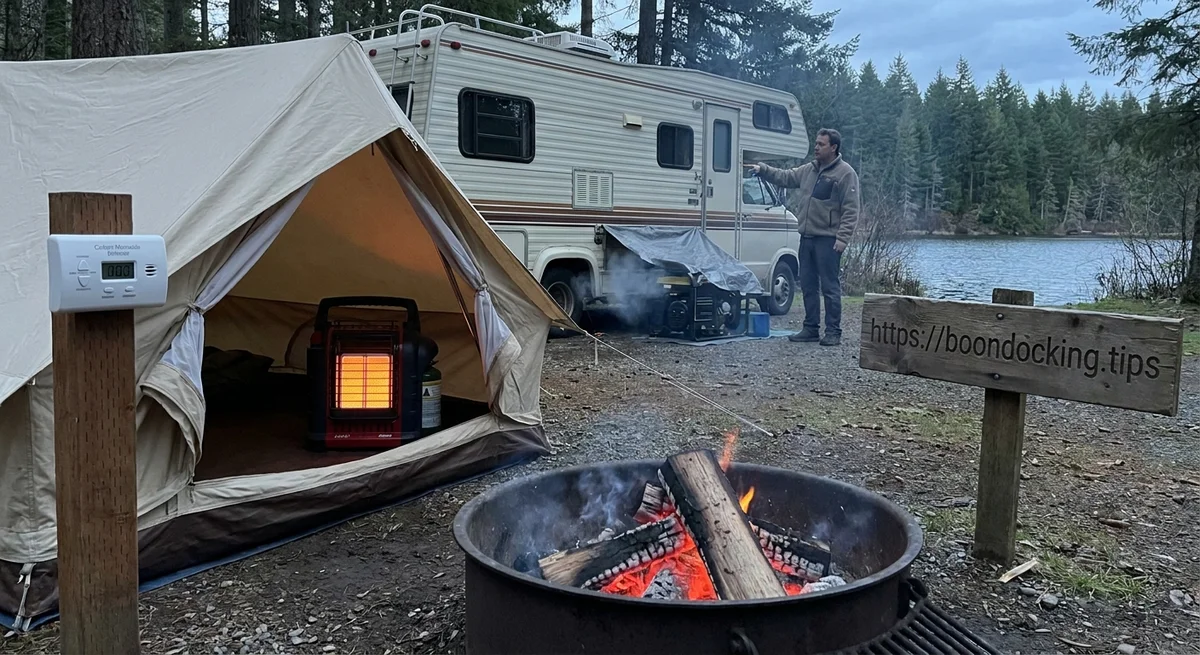
Fire, Carbon Monoxide, and Ventilation Risks by the Lake
Fire, Carbon Monoxide, and Ventilation Risks by the Lake
Camping in an RV on a forested lakeside can be cozy, but it also brings serious safety challenges. In a tight space, propane heaters, diesel heaters, and portable water heaters can provide warmth and hot water – but if misused they risk deadly carbon monoxide (CO) buildup or fires. Wildfire concerns add another layer: many parks ban open flames, so campers must use approved stoves and avoid sparks. Even routine activities like cooking and breathing create humidity, which can condense on cold walls and ruin the RV’s structure. This article lays out best practices and preventive steps: safe heater use and detector placement, respecting fire bans with the right stove, balanced ventilation to remove moisture yet retain heat, and an emergency checklist for CO exposure or fire. Each guideline is backed by expert sources to keep you safe.
Safe Heating in RVs
Propane Heater Safety
Propane heaters are common in RVs, but they must be handled carefully. Whenever a propane appliance is running, it displaces oxygen and produces combustion gases (including CO). Always ventilate: crack a window or open a vent to admit fresh air. In fact, the U.S. Consumer Product Safety Commission warns, “People die every year from carbon monoxide poisoning from portable camping heaters… inside campers” (www.cpsc.gov). Never run a propane heater while anyone is sleeping or unattended; turn it off before bed. Use only heaters designed for indoor use (many have tip-over shut-off and low-oxygen sensors). For example, RV experts highlight safe models like the Mr. Heater Big Buddy, which includes an oxygen depletion sensor and tip-over switch (www.rvtravel.com). Keep propane cylinders outside the RV, and never store spare tanks indoors. Check hoses and connections for leaks before each use (using soapy water to find bubbles), and always have CO and propane leak detectors installed as described below.
Diesel Heater Safety
Many RVs and boats now use compact diesel air heaters (or cookers) for heat and hot water. Properly installed, these have sealed combustion chambers and vent fully outside. A specialist manufacturer notes that a well-tuned diesel furnace typically emits only a few hundred ppm of CO – far less than most gasoline engines (www.dieselheat.com.au). The critical point is this: all exhaust must be routed outdoors. Most RV diesel heaters mount under the floor or wall with exhaust exiting outside (www.dieselheat.com.au). Never allow diesel exhaust into the living area. Portable diesel heaters (often used at outdoor campsites) should be used only outside, with only the warmed air ducted in (www.dieselheat.com.au). In any case, treat diesel heat like any combustion appliance: ensure fresh air intake and install a CO alarm. One safety guide advises that anyone using diesel or propane heating should have a working CO detector on board (www.dieselheat.com.au).
Portable Water Heater Safety
Propane or kerosene portable tankless water heaters (for showers) are essentially small heaters. They produce CO and must be used with caution. Importantly, do not use a portable water heater inside a closed RV unless it is explicitly rated for indoor use with proper venting. Generally, it’s safest to operate these units outdoors (for example, in a screened compartment venting outside) or use an RV’s built-in hot water system. Treat them like any other fuel burner: keep a window or vent open if they run, and never sleep with them on. As with space heaters, have CO detectors active when using any fuel-burning water heater.
CO/Propane Detector Placement and Testing
Every RV must have working alarms. Install a carbon monoxide detector outside sleeping areas so it will wake you if CO rises at night (camperfaqs.com). It can be mounted on a wall or ceiling about 4–6 inches from the floor (CO is roughly as heavy as air) (camperfaqs.com). Place the CO alarm in areas where gas appliances run (kitchen or near the furnace). If you have a dual CO/LP-gas detector, mount it low on the wall, several inches above the floor, so it senses heavy propane gas (camperfaqs.com). For example, CamperFAQs.com recommends putting a combined CO/propane alarm between 4″ and 20″ off the floor near appliances like the furnace, stove, water heater, or fridge (camperfaqs.com). Avoid hiding detectors: don’t place them behind curtains, inside cabinets, or too close to vents or outside walls (camperfaqs.com).
Test your detectors often. Experts advise pressing the “test” button on each alarm at least monthly – or even every trip – to ensure the horn works (greatamericanrvblog.com). (Some recommend testing weekly or after storage, and replacing units every 5–7 years as directed by the manufacturer (camperfaqs.com) (greatamericanrvblog.com).) A digital-readout CO alarm can be extra helpful, because you can see CO levels rising before it trips (www.doityourselfrv.com). Always replace batteries or units promptly if the test fails.
The bottom line: detect, don’t react. Proper placement and regular testing of CO and propane alarms are non-negotiable RV safety measures (camperfaqs.com) (greatamericanrvblog.com). They give early warning of leaks or incomplete combustion before CO accumulates to dangerous levels.
Fire Bans and Camp Stove Safety
Fire Bans and Spark Risk
In many forested parks (especially in dry seasons), open flames are restricted. During a full fire ban, campfires are strictly prohibited (blog.ontarioparks.ca). Even holding embers from your campfire can blow sparks onto dry brush and ignite a wildfire. For example, Ontario Parks warns that during fire bans “campfires are NOT permitted at all” (blog.ontarioparks.ca), though they do allow controlled cooking flames. Use only approved stoves: propane or gas stoves with a shut-off valve and portable liquid-fuel stoves (white gas, kerosene, alcohol) are typically allowed (blog.ontarioparks.ca). In contrast, charcoal grills, wood or pellet stoves, and open wood fires are banned (blog.ontarioparks.ca). Always keep any stove at least 1 meter from flammable materials (blog.ontarioparks.ca). If a fire starts (even a small one), put it out immediately and report it. Remember: in many regions, if an illegal campfire triggers a wildfire, the camper can be held legally responsible for costs and damages (blog.ontarioparks.ca).
Camp Stove Selection and Wind Effects
By a lake, wind can be unpredictable. Gusts help fans but can snuff out flames or blow them onto unintended surfaces. Choose a stove designed for stability and windproofing. Look for one with a built-in windscreen or bring a windbreak (e.g. fold-up metal screen) (www.switchbacktravel.com). Switchback Travel advises stoves with three-sided windscreens to protect the burner on gusty days (www.switchbacktravel.com). Even a simple improvised barrier (stone wall or foil pan) can keep heat on the pot. Also ensure your stove has a sturdy base or legs; a tipping stove is a fire hazard.
Fuel choice matters too. Propane canisters are convenient and perform well above freezing (www.switchbacktravel.com), but in very cold weather propane loses pressure and flame strength (butane is even worse) (www.switchbacktravel.com). If you expect sub-freezing nights, a white gas (Coleman fuel) or multi-fuel stove may be more reliable – though these are typically only for cooking (never inside the RV) (www.switchbacktravel.com). Whatever stove you use, follow all instructions and keep it level. Use it on rock or gravel, not on dry grass or driftwood.
In short, use non-wood cooking methods during fire risk periods. After cooking, double-check the stove is completely off and cool. Keep flammable liquids and extra fuel canisters safely stored outside the RV. By selecting the right camp stove and shielding it from wind, you minimize the chance of sparks or flame spread.
Ventilation and Moisture Control
An RV’s well-sealed design traps moisture from breath, showers, and cooking. If not vented, this water vapor condenses on cold walls, leading to mold, wood rot, and structural damage (www.winnebago.com) (www.rvtravel.com). (Winnebago notes that occupants alone can produce up to three pounds of water vapor per day each; breathe, cook, and shower on damp days and that’s a lot of moisture in the air (www.winnebago.com).) To protect your rig, you must balance removing humidity with keeping warmth.
- Vent regularly, especially when moist. After cooking or showering, use roof vents or exhaust fans (e.g. cooker/fan or bathroom fan) to pull humidity outside. Open a window or run a roof fan on high for a few minutes (www.karavanista.cz) (www.rvtravel.com). Experts recommend airing out the RV for a few minutes at least twice a day (morning and evening) to let in drier air (www.karavanista.cz). This is true even in cooler weather: a short burst of ventilation expels moist air before it condenses. If conditions allow, leave a vent slightly cracked or use a vent cover that lets air flow while keeping rain out (www.rvtravel.com).
- Use fans and dehumidifiers. A small circulating fan can even out temperatures and prevent localized cold spots. Consider a portable dehumidifier to pull moisture from the air without dumping all the heat outside (www.rvtravel.com) (www.winnebago.com). For instance, RV experts say roof vent covers allow you to keep vents open in bad weather (www.rvtravel.com), and dehumidifiers or moisture absorbers (silica packs) in basins or cabinets help keep enclosed spaces dry (www.rvtravel.com) (www.winnebago.com). Check humidity with a hygrometer – aim for under 60%.
- Insulation and skirting. Improve insulation if possible (e.g. insulated window covers, floor mats). Adding skirting or an underbody cover around the RV blocks devilish drafts under the floor (www.doityourselfrv.com) (www.karavanista.cz). This keeps cold air from sucking heat and moisture out of the cabin. By stopping cold drafts under the rig, you’ll keep floors warmer and discourage condensation on lower walls.
- Dry before rain. If rain or snow is coming, briefly open vents (with covers) to purge damp air, then seal them. If going to sleep for the night, ventilate well first, then close up. Always use vent screens to prevent insects that could compromise a later seal.
- Wipe and watch. Inspect walls, window frames, and under sinks for early signs of damp. Promptly wipe any beads of water. Pay attention to cabinets or closet corners (as Czech camping advice suggests, open cupboard doors while heating to allow air flow (www.karavanista.cz)). Remove clutter from wall corners, where still air can trap moisture and spoil wood over time.
In summary, prevent first, clean second. Good circulation (roof vents, fans, occasional window opening), plus absorption (dehumidifiers, desiccants) are the best defense against condensation (www.winnebago.com) (www.rvtravel.com). Proper insulation and sealing also help keep outer cold from meeting inner warmth. By controlling humidity, you protect laminated walls and wood framing from rot and corrosion (www.rvtravel.com) (www.winnebago.com).
Emergency Response Checklist
Even with precautions, be prepared for emergencies. Here’s a simple checklist for critical situations:
- Carbon Monoxide Alarm: At the first alert of the CO detector or if anyone becomes ill, evacuate immediately. Move everyone into fresh air – step outside with people and pets (www.sja.org.uk). Shut off gas appliances if safe to do so, but never jeopardize safety by searching inside a smoky rig. Dial emergency services (911 or local equivalent) to report possible CO exposure (www.sja.org.uk). CO symptoms mimic the flu (headache, nausea, dizziness, confusion) (www.cpsc.gov); do not assume it’s nothing. While waiting for help, encourage breathing fresh air and monitor the victim. If someone collapses, begin CPR if trained.
- Fire in RV: If you spot fire or smoke, sound the alarm and get out. Everyone should exit the RV immediately via any available door or window. Remember that smoke rises, so stay low if smoke fills the cabin. Once outside, move a safe distance away (upwind of the fire). Call 911 at the first safe opportunity. Do not re-enter to salvage belongings. If the fire is small and contained (e.g. a stove flame), use a fire extinguisher, blanket, or water. (Always keep a charged extinguisher near the exit door and kitchen (rvoutfitting.com).) For RV fires, focus on abandoning the rig; RV fires spread fast due to propane tanks and fuel.
- Wildfire/Wildfire Nearby: By a forested lake, wildfires can spread quickly. Plan evacuation before you need it. Identify at least two exit routes from the campsite (for example, a road and a foot trail). Park and orient your RV so it can drive out easily (e.g. facing the exit road). Keep keys and a “go-bag” of essentials (phones, documents, medications) by the door (rvoutfitting.com). If a wildfire or wind-carried embers threaten, leave early – do not wait for an official order. The RV safety guide [rvoutfitting.com] advises defining “evacuation triggers” (such as alert updates, visible smoke, or park warnings) and having a plan that doesn’t rely on just one road (rvoutfitting.com). In practice, that means if smoke is visible uphill or you hear a fire siren, pack up immediately and head to a safe location away from the forest (often downhill or toward water).
- Communication and Meet-up: Designate a meeting point away from danger (for example, a parking area by the lakeshore or a cleared staging area accessible by road). Ensure everyone knows it. If partners or kids are outside gathering wood or at the lake, give them a whistle signal and instruct them to come back if an alarm sounds. Keep a charged phone or radio available to call for help and to receive park alerts or weather warnings.
- Injury or Sickness: Keep a first-aid kit on hand. For any burns, cool the burn with water and seek medical help if serious. If someone is injured evacuating, attend to them once you’ve reached safety. Always carry essentials (like water and a flashlight) in case evacuation takes longer than expected.
Remember: The priority is human life. Objects and even the RV can be replaced; people cannot. In an emergency, get out, stay out, and call for help. Quick evacuation and fresh air are the two most critical responses to CO or fire threats (www.sja.org.uk) (rvoutfitting.com).
Conclusion
By combining vigilance with these best practices, you can enjoy lakeside camping without unnecessary risk. Always respect fuel safety rules: never run heaters in sealed spaces, and never leave them on overnight. Use detectors correctly placed and keep them tested so they truly protect you. During fire bans, rely on safe gas stoves instead of open fires, and account for winds that could fan a flame into trouble. Ventilate smartly: let the RV breathe a little to lose humidity, but use fans and exhausts to keep most heat in. Handle condensation proactively to preserve the RV’s structure. Finally, have a clear emergency plan: if CO alarms or fires occur, evacuate calmly yet rapidly via your chosen escape route. With these measures in place, you’ll greatly reduce the chances of a carbon-monoxide incident or a fire, and know exactly what to do if something does go wrong.
Get New Boondocking Research & Podcast Episodes
Subscribe to receive new research updates and podcast episodes about boondocking, off-grid camping, RV travel, van life, dispersed camping, campsites, gear, power, water, safety, and road trip planning.